

CS-CAN|INFO-CAN Announces 2025 Award Recipients Honouring Excellence in Canadian Computer Science
Nine honourees recognized for lifetime achievement, teaching excellence, outstanding early-career contributions, doctoral research, and distinguished service
CANADA. CS-CAN|INFO-CAN, the national organization representing computer scientists across Canada, today announced its 2025 award recipients. Nine individuals have been selected to receive honours in five categories: Lifetime Achievement, Excellence in Teaching, Early Career Research, Outstanding Dissertation, and Distinguished Service. The awards recognize sustained contributions to the field, innovative pedagogy, the exceptional promise of Canada’s next generation of computer scientists, exemplary doctoral research, and extraordinary service to the Canadian computing science community.
“These awards reflect the remarkable depth and breadth of Canadian computer science,” said CS-CAN|INFO-CAN. “From foundational research that secures our digital infrastructure to innovations in AI, graphics, and software engineering, this year’s recipients demonstrate why Canada continues to lead on the world stage.”
Lifetime Achievement Awards
The Lifetime Achievement Award recognizes computer scientists whose careers have had a profound and lasting impact on the discipline, on institutions, and on the broader research community.
Eugene Fiume, Simon Fraser University
Professor Eugene Fiume is a pioneering figure in computer graphics whose work has shaped how digital imagery is created, simulated, and understood. As Dean of the Faculty of Applied Sciences at Simon Fraser University (and formerly Chair of Computer Science at the University of Toronto), he has built programs, mentored nearly 80 graduate students, and co-founded JALI Research, a successful facial animation company originating from his university lab. His more than 140 publications, two books, and patents in computer graphics and biomedical applications have earned him fellowships in the Royal Society of Canada, Eurographics, and the SIGGRAPH Academy, as well as the NSERC Synergy Award for Innovation.

Reyhaneh Safavi-Naeini, University of Calgary
Professor Reyhaneh Safavi-Naeini is a world-leading researcher in cryptography and cybersecurity whose career spans four decades. Her foundational contributions to quantum-resistant cryptography, distributed digital signatures, and cloud security have shaped international standards and influenced real-world systems design. She co-founded the University of Calgary’s Institute for Information Security and Privacy, is a founding member of Canada’s National Cybersecurity Consortium, and has led research initiatives totalling nearly $20 million in funding. Dr. Safavi-Naeini is a Fellow of the International Association for Cryptologic Research (the only Canadian woman to hold this distinction), and has received the Test-of-Time Award and the Japan Telecom System Technology Award.

Houari Sahraoui, Université de Montréal
Professor Houari Sahraoui is a foundational figure in automated software engineering whose career of more than thirty years has transformed how intelligent techniques are applied to software design and analysis. A pioneer in AI-driven software improvement long before the term became common, he has received a prestigious international Test-of-Time recognition for his contributions to automated model repair and restructuring. Beyond his research, Professor Sahraoui played an instrumental role in establishing Mila, now one of the world’s foremost AI research institutes, and was among the founding members of CS-CAN|INFO-CAN itself. He has supervised close to one hundred graduate students and postdoctoral fellows, whose careers now span Canada, the United States, Europe, Asia, and Africa.

Excellence in Teaching Award
The Excellence in Teaching Award recognizes computer scientists who have made exceptional and innovative contributions to computer science education.
Meghan Allen, University of British Columbia
Meghan Allen is an Associate Professor of Teaching in Computer Science at the University of British Columbia whose scholarly and reflective approach to pedagogy has raised the standard for introductory computing education. She specializes in teaching large-enrollment software development courses to majors, non-majors, and English language learners, consistently adapting her methods, including multiple concept representations and rapid, high-quality feedback, to ensure every student is supported. In her role as Associate Head, she has led curriculum renewal across UBC’s computer science department and contributed to the UBC Science Data Science major and UBC Vantage College’s research courses. She has supervised more than 80 student projects and shared her expertise at forums including the ACM conference for computer science educators.

Early Career Research Awards
The Early Career Research Award recognizes exceptional researchers in the early stages of their careers who have already demonstrated outstanding contributions and significant promise.
Manolis Savva, Simon Fraser University
Manolis Savva is an Associate Professor and Canada Research Chair (Tier 2) in Computer Graphics at Simon Fraser University whose research develops algorithms for creating human-centric interactive 3D scenes, work with broad implications for architectural visualization, virtual and augmented reality, AI, and ergonomics. His contributions to 3D computer vision and graphics have been cited more than 32,400 times (h-index 50) and recognized with awards including an ICLR 2023 Outstanding Paper Award, an ACM UIST Notable Paper Award, an ICCV Best Paper Nomination, and the 2022 Graphics Interface Early Career Researcher Award.
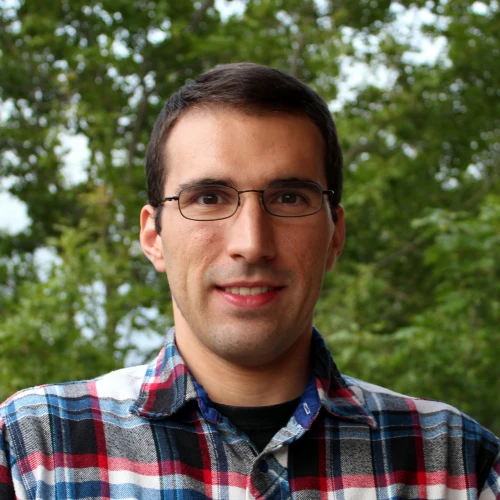
Song Wang, York University
Dr. Song Wang is an internationally recognized researcher in software engineering who has pioneered methods for addressing reliability and security challenges in AI infrastructure systems. He introduced the concept of the “assurance gap” to define the limitations of traditional software assurance when applied to AI systems, establishing the need for AI-specific methodologies. His research has produced practical tools that have uncovered hundreds of real-world bugs and vulnerabilities in widely deployed AI frameworks, and his work in LLM-based software engineering automation has received multiple distinguished paper awards across both academia and industry.
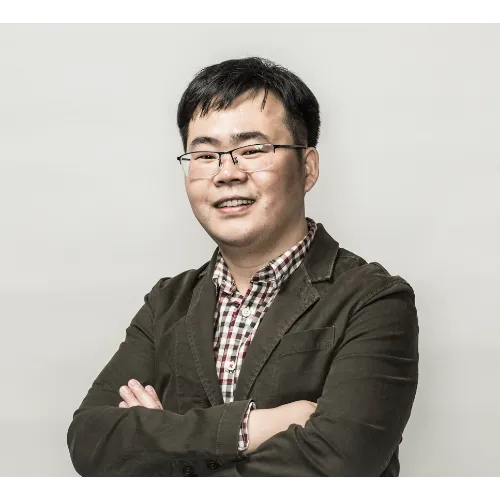
Jian Zhao, University of Waterloo
Jian Zhao is a leading researcher in human-computer interaction and interactive data visualization at the University of Waterloo, whose work advances a vision of computing systems that augment human intelligence while preserving human agency. His research has produced major advances in creative authoring tools and collaborative data sensemaking, with more than 100 peer-reviewed publications recognized by five Best Paper Awards and eight Best Paper Honourable Mentions. Dr. Zhao’s work has attracted over $2 million in competitive funding and has been translated into tangible products through collaborations with Adobe, Meta, Cisco, Unity, and several technology startups, with more than 20 patent applications filed.
Canadian Computer Science Distinguished Dissertation Award
The Canadian Computer Science Distinguished Dissertation recognizes exceptional doctoral research that represents a significant contribution to computer science.
Georgianna Lin, University of Toronto
Georgianna Lin’s doctoral dissertation, “Multimodal Tracking with Ubiquitous Devices to Foster Holistic Menstrual Health Sensemaking,” completed in the Department of Computer Science at the University of Toronto in 2025, addresses a critical and underserved gap in personal health technology. Current menstrual health tools focus narrowly on cycle monitoring, overlooking the hormone-driven connections between menstrual cycles and broader aspects of well-being such as sleep, exercise, and nutrition. Dr. Lin’s research investigates how access to less commonly tracked physiological signals (including heart rate and body temperature through consumer health devices) can expand users’ understanding of their own health. Through iterative design and deployment of a prototype application, she demonstrated that multimodal tracking can shift users from narrow to holistic views of menstrual health, while also surfacing new design challenges around goal-setting and decision-making with complex data. The dissertation contributes a framework for more comprehensive, personalized, and adaptive health tools, and advocates for a proactive approach to menstrual health literacy that acknowledges its interconnectedness with overall well-being.

Distinguished Service Award
The Distinguished Service Award recognizes individuals who have rendered exceptional and lasting service to CS-CAN|INFO-CAN and to the Canadian computing science community.
Dr. Hausi A. Müller, University of Victoria
Dr. Hausi A. Müller is a Professor of Computer Science at the University of Victoria and a Fellow of the Canadian Academy of Engineering. He is recognized for his sustained stewardship of CASCON (the International Conference on Collaborative Advances in Software and Computing), where, as General Co-Chair and long-standing Steering Committee member, he has built a formal co-sponsorship between CASCON and CS-CAN|INFO-CAN. Under this partnership, CASCON proceedings are published in IEEE Xplore under co-sponsorship by IEEE Computer Society and CS-CAN|INFO-CAN, while the conference actively hosts the CS-CAN|INFO-CAN Annual Awards Ceremony and Department Chairs Meeting as co-located events. This deliberate structural accommodation has given CS-CAN|INFO-CAN access to an internationally recognized venue and organizational infrastructure that would otherwise require substantial independent effort to replicate. An international expert in software engineering, quantum computing, and intelligent cyber-physical systems, Dr. Müller has published over 250 papers and has served in major leadership roles including Vice President of the IEEE Computer Society Technical and Conference Activities Board and co-founder and Steering Committee Chair of IEEE Quantum Week. He is the recipient of the 2024 IEEE Computer Society T&C Distinguished Leadership Award.

Award recipients will be recognized at the CS-CAN|INFO-CAN annual awards ceremony. For more information about the awards, nomination process, and past recipients, visit cscan-infocan.ca/awards.
About CS-CAN|INFO-CAN
CS-CAN|INFO-CAN is the national organization representing computer scientists at universities across Canada. It advocates for the discipline, fosters community, and celebrates outstanding contributions to computer science research, education, and service.
Media Contact
CS-CAN|INFO-CAN Communications Gina van Dalen, Executive Director CS-CAN|INFO-CAN cscan-infocan.ca