
Gagnants de l'année en cours
CS-CAN|INFO-CAN Announces 2025 Award Recipients Honouring Excellence in Canadian Computer Science
Eight honourees recognized for lifetime achievement, teaching excellence, outstanding early-career contributions, and doctoral research
Les prix CS-CAN|INFO-CAN récompensent les contributions exemplaires à la recherche en informatique, à l'enseignement, aux services communautaires et professionnels, ainsi que les réalisations importantes des informaticiens.
Le processus d'examen et de sélection des lauréats est rigoureux. Les nominations sont présentées à Comités des prixLes lauréats sont choisis par un jury composé d'informaticiens de différentes disciplines du pays qui, après avoir examiné attentivement chaque candidature, sélectionne les lauréats.
Félicitations aux lauréats des prix CS-Can|Info-Can suivants :
Lifetime Achievement Award 2025
The Lifetime Achievement Award recognizes computer scientists whose careers have had a profound and lasting impact on the discipline, on institutions, and on the broader research community.
Eugene Fiume
Université Simon Fraser
Eugene Fiume
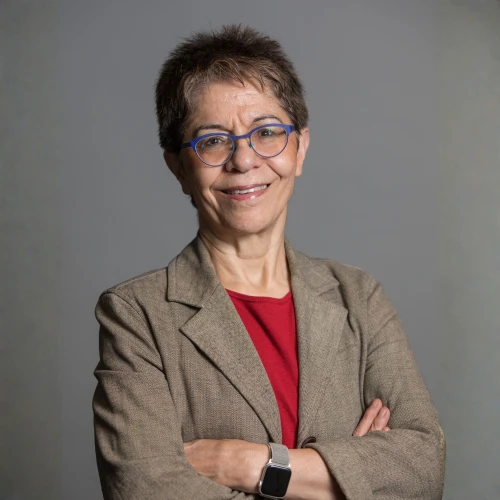
Fiume’s research has focused on making digital imagery more realistic and mathematically rigorous. His work on simulating natural phenomena such as fire, water, and wind has influenced visual effects in film and design, while his contributions to animation and shape modeling have helped create lifelike characters and environments. He has published two books, over 140 research papers, and holds patents in computer graphics and biomedical applications. His collaborations with industry, including a long partnership with Alias/Autodesk, earned him the NSERC Synergy Award for Innovation. He also co-founded JALI Research, a successful facial animation company that began as a university project.
As an academic leader, Fiume has helped build programs, recruit faculty, and design spaces that foster innovation. At the University of Toronto, he played a key role in raising the department’s global ranking and creating new opportunities for teaching-focused faculty. At SFU, he has guided the creation of a new school, new buildings, and professional graduate programs, while championing diversity and inclusive curricula. His leadership emphasizes teamwork and the societal impact of research.
Fiume’s contributions have been widely recognized. He is a Fellow of the Royal Society of Canada, a Eurographics Fellow, and a member of the SIGGRAPH Academy. He has mentored nearly 80 graduate students, many of whom have become leaders in academia and industry. His career reflects a passion for building, whether it is ground-breaking research, innovative programs, or opportunities for others to succeed. Through his work, Eugene Fiume has helped shape the technologies and institutions that define our digital world.
Reyhaneh Safavi-Naeini
Université de Calgary
Reyhaneh Safavi-Naeini
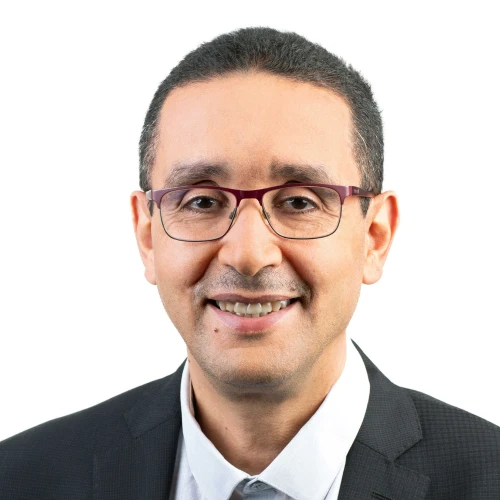
Cryptography is the science that underpins information protection: from securing online banking and protecting medical records to enabling private communication and safeguarding national digital infrastructure. Recent advances in quantum computing technologies have created a significant challenge for the future of information security, as large-scale quantum computers will be able to break many of the cryptographic algorithms currently used across the Internet once they become available. Dr. Safavi-Naeini has made foundational contributions to cryptography and information security, developing new mathematical theories and techniques for long-term secure communication that remain robust even against adversaries equipped with quantum computers. Her work on distributed and privacy-preserving digital signatures, cloud security, and the protection of digital and privacy rights has informed new ways of understanding and improving how sensitive information can be secured in today’s Internet-connected world. Her research has influenced the design of real-life systems and has been cited thousands of times.
She has been committed to advancing science for the benefit of society and, throughout her career, has worked to translate cutting-edge ideas into prototypes that explore the challenges of securing complex information and communication systems. She led major research projects on digital rights management for protecting creative content; led an interdisciplinary team to design a secure and privacy-preserving model for a Canadian Central Bank Digital Currency (selected as one of the three national winners in the Bank of Canada’s Model-X Challenge); and currently leads a multi-university, multidisciplinary team developing secure decentralized frameworks for issuing, exchanging, and managing “green credits,” aimed at incentivizing broader public participation in the green economy. Her long-standing collaborations with industry partners has played a key role in shaping her research direction for the society’s benefit.
Dr. Safavi-Naeini has also played a transformative role in building Canada’s cybersecurity research capacity. She is a co-founder of the University of Calgary’s Institute for Information Security and Privacy, now one of the leading centers in the country and a founding member of Canada’s National Cybersecurity Consortium. She has held three prestigious research chairs, each awarded through rigorous national and international evaluation, and has led major research initiatives supported by nearly $20 million in funding.
As an educator and mentor, she has trained many graduate students and postdoctoral fellows who now hold faculty and leadership positions in Canada and around the world. She has been a strong advocate for broadening participation in cybersecurity, mentoring women and students from diverse and underrepresented backgrounds, and initiating new educational programs, such as the Professional Master of Information Security, to meet Canada’s growing need for skilled cybersecurity professionals.
Her research excellence and contributions to information security have been recognized internationally through her election as a Fellow of the International Association for Cryptologic Research, one of the highest honours in the field, awarded to only a handful of Canadian researchers, with her being the only woman. She has also received major awards, including the Test-of-Time Award for one of her influential papers, the Japan Telecom System Technology Award for innovation in secure communication systems, and recognition as one of the national winning teams in the Bank of Canada’s Model-X Challenge.
Dr. Safavi-Naeini’s contributions to research, innovation, education, and the training of future cybersecurity researchers will have a lasting impact on the field, on Canadian society, and on Canada’s research capacity and international standing.
Houari Sahraoui
Université de Montréal
Houari Sahraoui

Throughout his career, Professor Sahraoui has pursued a single, powerful idea: using intelligent methods to automate and improve software development. Long before the rise of modern artificial intelligence, he pioneered techniques that allowed computers to detect problems in large software systems and suggest ways to fix them. These early innovations laid important foundations for what is now known as automated software engineering.
As the field evolved, he continued to break new ground. He was among the first to show how computers could learn from examples to automatically repair and restructure software models, work that led to a prestigious international award recognizing its long-term impact. More recently, he has become a recognized world expert on applying deep learning and large language models to help developers review code, modernize systems, and build software more efficiently. His research has shaped the emerging field of AI for Software Engineering, which now plays a crucial role across industry and academia.
Professor Sahraoui’s influence extends far beyond his scientific discoveries. In Canada, he played an important role in the creation of Mila, now one of the world’s leading AI research institutes, and he was instrumental in establishing CS-Can/Info-Can, the national organization representing computer scientists across the country. His leadership has strengthened the visibility and impact of Canadian research on the global stage. Internationally, he has served for decades on the committees of major world conferences, chaired numerous scientific events, and helped bring top-tier gatherings to Canada. His service has fostered collaboration across continents and contributed to shaping the direction of the global research community.
Equally important is his dedication to training the next generation of researchers. He has supervised close to one hundred graduate students and postdoctoral fellows, many of whom now hold faculty positions in Canada, the United States, Europe, Asia, and Africa. His mentorship style, supportive, rigorous, and focused on helping students become independent thinkers, has earned him a reputation as an exceptional educator. One of his former students received the Early Career Award of CS-Can/Info-Can, a testament to the strength and influence of his guidance.
From groundbreaking scientific contributions to institution-building and mentorship, Professor Sahraoui has made a profound and lasting impact on computer science. His work continues to shape how intelligent technologies are used to improve software systems and, more broadly, how AI can serve society. His career exemplifies sustained excellence, visionary leadership, and deep commitment to advancing knowledge in Canada and internationally.
Excellence in Teaching Award Winners 2025
The Excellence in Teaching Award recognizes computer scientists who have made exceptional and innovative contributions to computer science education.
Meghan Allen
Université de la Colombie-Britannique
Meghan Allen
Canadian Computer Science Distinguished Dissertation Award 2025
Les étudiants en doctorat d'informatique qui terminent leurs études dans des établissements canadiens et qui reconnaissent l'excellence de la recherche et de la rédaction d'une thèse de doctorat.
Georgianna Lin
Université de Toronto
Georgianna Lin
This dissertation explores how individuals can be better supported in developing a more comprehensive understanding of their menstrual health and in achieving their broader health goals. It begins by examining how access to less commonly known menstrual health signals (e.g., heart rate, body temperature) through consumer health technologies can enhance users’ awareness. Users showed they could expand their perception of menstrual cycles beyond menstruation, but struggled to relate data from diverse sources. To address this, I identified design requirements for tools that support engagement with multimodal menstrual health data. These insights informed the development of a prototype app, used to study how users shift from narrow to holistic understandings of menstrual health. Participant usage patterns underscored the potential of multimodal tracking to foster interconnected views of menstrual health, while also revealing challenges in goal-setting and decision-making amid complex data. The research then broadens to examine how multimodal tracking fits into the wider menstrual health literacy ecosystem, exploring perceptions of menstrual health across life stages. Findings reveal a lack of both digital and non-digital resources that explain menstrual health’s relationship with other body systems.
This dissertation contributes to the discourse on menstrual health literacy by identifying gaps in current resources and demonstrating the potential of multimodal tracking technologies. It suggests new opportunities for designing more comprehensive, personalized, and adaptive tools to help individuals better understand and manage evolving health needs. Ultimately, this work advocates for a more informed and proactive approach to menstrual health, one that acknowledges its interconnectedness with overall well-being and empowers individuals to make decisions based on holistic understanding rather than limited scope.
Early Career Research Awards 2025
The Early Career Research Award recognizes exceptional researchers in the early stages of their careers who have already demonstrated outstanding contributions and significant promise.
Manolis Savva
Université Simon Fraser
Manolis Savva
Song Wang
Université de York
Song Wang
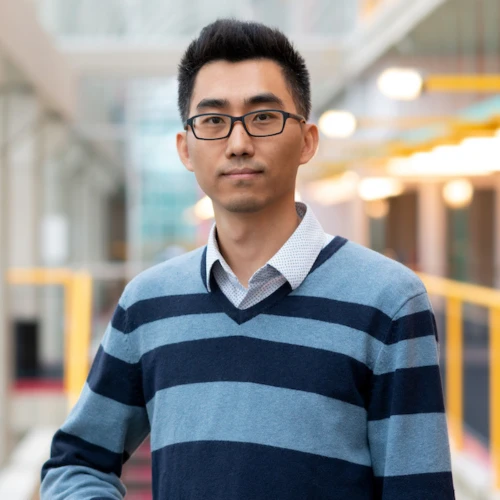
Jian Zhao
Université de Waterloo

Jian Zhao
Distinguished Service Award 2025
Reconnaît les services exceptionnels rendus à CS-Can|Info-Can et à la communauté informatique canadienne dans son ensemble (sélectionné par le conseil d'administration de CS-Can|Info-Can).
Hausi Müller
Université de Victoria
Hausi Müller
`A propos des prix
Award recipients will be recognized at the CS-CAN|INFO-CAN annual awards ceremony. For more information about the awards, nomination process, and past recipients, visit cscan-infocan.ca/awards.
A propos de CS-CAN|INFO-CAN
CS-CAN|INFO-CAN is the national organization representing computer scientists at universities across Canada. It advocates for the discipline, fosters community, and celebrates outstanding contributions to computer science research, education, and service.
Media Contact
CS-CAN|INFO-CAN Communications
Gina van Dalen, Executive Director
CS-CAN|INFO-CAN